Business

Stopping Alabama Rot

Staying Aware of a Very Unpleasant Disease

Alabama Rot (or to use its clinical name: Cutaneous & Renal Glomerular Vasculopathy) is a very unpleasant and often fatal disease whose origins and causes remain largely unknown. Read on to learn more about identifying Alabama Rot and, most importantly, how to prevent it.

History

As the name suggests, Alabama Rot was first spotted in Alabama, USA in the 1980s. It only affected greyhounds at that point, which led many researchers to believe the roots of the disease could be genetic. Unfortunately, when it was discovered in the UK in 2012 it wasn’t picky and hasn’t been since. An outbreak occurred in 2014, during which the disease did not discriminate between the size, breed, age or gender of its victims.

Scientifically speaking, vets remain unsure what causes Alabama Rot; opinion is divided over whether it’s caused by parasites or bacteria and some US reports suggest it could be linked to E.coli. There has been no evidence for this in any UK cases.

What We Know

More cases are reported between November and May than in the summer months, suggesting that dogs are more likely to catch Alabama Rot in cold climates or wintery conditions.

Again, Alabama Rot does not discriminate. Dogs are at risk whatever their age, gender or breed.

It attacks your dog’s skin and kidneys – often resulting in fatal renal failure. Contact your vet immediately if your dog displays any of the following symptoms: 

  • Skin lesions (the most obvious sign). It could be erythema – redness caused by increased blood flow, erosion or ulcers. You’re likely to find them on extremities such as distal limbs, the muzzle and the ventrum (underside of the belly) – the body-parts most likely to encounter mud when a dog is out walking. Note: the skin lesions will not pertain to any external incident, collision or accident.
  • A high fever
  • Lethargy or general illness
  • Weight loss
  • Vomiting/retching

It’s worth noting that these symptoms can belong to other conditions, therefore we cannot overstate the importance of taking your dog in to visit the vet as soon as you can. The condition can then be diagnosed and the appropriate treatment can be administered.

What Can You Do?

As hard as it may sound, try not to panic. Although it has grown in the UK over recent years, Alabama Rot remains comparatively rare.

Stay calm, alert and aware. Read up on cases around the country and avoid afflicted areas. Though veterinary experts are yet to pinpoint the exact causes of Alabama Rot, they have observed that exposure to an affected animal often leads to a dog developing the disease.

Where possible, keep your dog in your sights when out walking them and check regularly for scars, cuts or lesions.

Avoid dirty, muddy areas and try to take your dog to clean, well-kept grassy areas.

After a walk, particularly if they’ve been rolling around in the mud or if the weather has been bad, wash your dog thoroughly and pay close attention to the areas most commonly affected by Alabama Rot – the snout, the legs and the underside of the belly.

Finally, here’s one more for luck: If in doubt, or if anything at all doesn’t seem right, contact your vet right away.

Ellen Whale

Ellen Whale

Patient Care Assistant/ Receptionist
PCA

Ellen joined us in 2026 after previously working in another vet practice and an animal sanctuary.

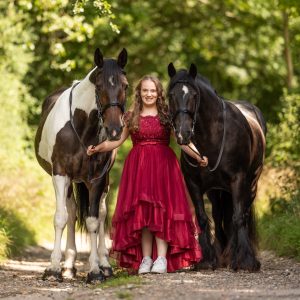
She loves horses and has two of her own called Molly and Abbie.  she also has four dogs who she enjoys walking in the Norfolk countryside. 

Adri Rossouw

Adri Rossouw

Locum Veterinary Surgeon
BVSc CertAVP (FelMed) MRCVS

Adri qualified as a Vet Surgeon in South Africa in May 1992 before moving to the UK in 1998.  She was partner in a small animal vet practice in Norfolk before retiring in May 2023.  She missed working with animals so now works as a locum part time.  She brings a wealth of experience to the team.  She achieved a CertAVP Small Animal Medicine (feline medicine) certificate in 2023.  She also enjoys orthopaedic and soft tissue surgery. 

Outside work Adri enjoys gardening, cycling and walking as well as being involved in the Gateway Church in Kings Lynn.  Adri has a tuxedo cat called Karolus and the village peacock Bob has claimed her garden.

Helen Manson

Veterinary Surgeon
BVM&S CertVOphthal MRCVS

Helen moved to Norfolk after graduating from Edinburgh Vet School in 2003. After working in practices around King’s Lynn, she joined the practice in 2023.


Helen enjoys small animal medicine and has a special interest in Ophthalmology. Helen gained her post graduate RCVS certificate in Veterinary Ophthalmology in 2012 and offers internal and external referrals for eye cases at the practice.


Outside of work, Helen is kept busy with her three children, Daisy the Labrador and Maggie the cat. She is married to Liam.

Ben Mcdonnell

Clinical Director & Veterinary Surgeon
BVSc, BSc, Cert AVP (GSAS)MRCVS

Following his graduation from Liverpool University in 2008 Ben returned to his roots in Cumbria, where he spent a short period working in mixed practice, before making the decision to work solely as a small animal veterinarian. He moved to Norfolk in 2022, when he joined our team at Swaffham, becoming a clinical director in 2025. Ben enjoys all aspects of first opinion small practice work, but especially enjoys the surgical side of the job and achieved the Royal College Certificate in Advanced Veterinary Practice (General Small Animal Surgery) in 2021.


Outside work Ben is often found exploring the Norfolk countryside and coastline with his son Joey. His other interests include mountain biking, walking, running and more recently paddle boarding.

Emily Neep

Veterinary Surgeon
BVetMed BSc(hons) MRCVS

Emily joined Swaffham Veterinary Centre in 2023, having worked as a vet in Wales. Originally from Norfolk, she was very excited to move back home! She has a keen interest in exotic animal care and also is trained in acupuncture.


In her spare time, Emily enjoys exploring her creative side with various craft projects, from crochet to jewellery making and can often be heard singing along to her favourite musical (much to the nurse’s dismay!). She has always had pets at home, ranging from various cats and dogs to a pet toad!

Liam Manson

Clinical Director & Veterinary Surgeon
BVM&S GPCert (SAS) MRCVS

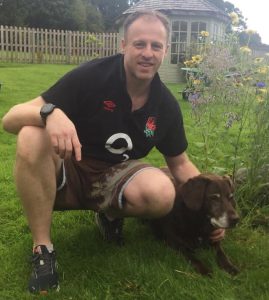
Liam founded Swaffham veterinary Centre in 2014, having worked in mid-Norfolk since graduating from Edinburgh University in 2003.  He completed a surgical certificate in 2007 and continues to have a keen interest in surgery but does enjoy the variety that a busy first opinion small animal practice gives each day.

Out of work Liam enjoys spending time with his wife and children, who all enjoy travelling in the UK and abroad.  he also enjoys exploring the beautiful Norfolk countryside with his Labrador Daisy.  When given the opportunity Liam is a keen gardener.